
Does Stevia Spike Insulin? Reading the Evidence Without Hype
What the controlled human trials actually show on steviol glycosides and the acute insulin response, and where the conflicting headlines are coming from.

“Does stevia spike insulin?” gets a different answer depending on whether the source is a peer-reviewed human trial, a cell-culture study, or a headline written off either. The reasonable read gets clearer once we agree on what “spike” actually means and what the human trials have measured.
What “spike” actually measures
In casual use, “spike” gets applied to any rise in glucose, insulin, sweet-taste signaling, or appetite. Those are four different things, and conflating them is most of the noise.
- Glucose response. What the bloodstream reads after the sweetener arrives, via venous plasma glucose or a CGM. Driven mainly by carbohydrate content and absorption rate.
- Insulin response. What the pancreas releases. Glucose is the dominant trigger, but incretin hormones, amino acids, and gut sweet-taste receptors can nudge insulin too.
- Cephalic-phase release. A small anticipatory insulin signal from taste, smell, or sight of food, before anything is absorbed.
- Chronic metabolic effect. Whether daily use shifts fasting insulin, HOMA-IR, or glucose tolerance over weeks to months. A separate question from the acute one.
Most people asking the headline question mean the second: does stevia, on its own, push insulin up the way sugar does? That is what the human trials test.
What controlled human trials have generally shown
Steviol glycosides — the sweet compounds from Stevia rebaudiana, sold as Reb A, Reb M, stevioside, and similar — are what is on the panel when a product lists “stevia leaf extract.” Non-nutritive: no calories, no carbohydrate, no glucose to absorb.
Controlled trials in healthy adults, adults with type 2 diabetes, and adults with obesity have generally shown that an acute dose of steviol glycosides, served alone in water or as a pre-meal drink, does not appear to produce a meaningful rise in plasma glucose or plasma insulin compared with a non-caloric control. Several pre-meal studies have also reported a lower post-meal glucose and insulin excursion compared with sucrose at matched sweetness, which is what you would expect from swapping a sugar load for a non-caloric one.
This is the evidence base behind the FDA’s GRAS notifications for high-purity steviol glycosides and the EFSA scientific opinions used in Europe. It is also why many clinicians treat stevia as a reasonable option for people managing blood sugar — though the right answer for any individual patient is a conversation with their own clinician.
Acute insulin response to stevia, in the controlled human trials, has generally been close to flat. That is the load-bearing finding.
Why the headlines disagree
If the human data is reasonably consistent, where are the “stevia spikes insulin” articles coming from?
| Source of the claim | What was actually measured | What it means for a human serving |
|---|---|---|
| In-vitro cell studies | Pancreatic beta cells exposed to steviol glycosides in a dish | Useful for mechanism, not for predicting human blood response. Concentrations are often far above a normal serving. |
| Rodent feeding studies | Mice or rats dosed at body-weight-scaled levels | Direction-of-effect signal; species and dose differences mean it does not transfer cleanly to humans. |
| Cephalic-phase studies | Short-window insulin readings after sweet taste alone | A small response is biologically plausible; the published magnitudes are small and the findings mixed. |
| Co-formulated products | A finished product containing stevia and other ingredients | The other ingredients (maltodextrin, dextrose, sugar alcohols, juice concentrates) move glucose and insulin on their own. Stevia gets blamed for the panel. |
The last row catches most home readers. A drink mix sweetened “with stevia” can still carry maltodextrin as a bulking agent, dextrose for taste, or fruit-juice concentrate for color. The insulin response to that product is not the insulin response to stevia.
The cephalic-phase question, honestly
A subset of studies has asked whether sweet taste alone — stevia held in the mouth, or sipped and spat — produces a small insulin response via sweet-taste receptors on the tongue and in the gut. The evidence is mixed: some studies report a small effect, others find none, and the effects that do show up are small relative to a sugar load.
For most readers in most situations, this is not the variable that decides whether stevia “spikes insulin.” The size of the effect, where it exists, is not on the order of an actual carbohydrate response.
The gut-microbiome line
A newer line of research asks whether non-nutritive sweeteners, including steviol glycosides, may change the gut microbiome in ways that could indirectly affect glucose handling over time. Some early human work has reported microbiome shifts with certain sweeteners; the stevia-specific human data is preliminary, and the clinical relevance is not yet settled. Worth tracking, not yet a reason to reclassify stevia as a sugar-equivalent on the insulin question.
How clinicians who work in this space treat it
Many dietitians and endocrinologists working with keto, low-carb, fasting, and diabetes patients tend to treat high-purity stevia as fasting-compatible and blood-sugar-compatible, with the usual caveats — and individual clinical guidance still varies.
- Read the full ingredient line. If the panel says “stevia” but the second ingredient is maltodextrin or dextrose, the response will not be stevia-only either.
- Watch the co-formulators. Erythritol, allulose, and monk fruit pair with stevia routinely; each has its own evidence base, and sugar alcohols can produce GI effects independent of insulin.
- Individual variation is real. CGM users sometimes see a small glucose nudge from a stevia-sweetened product. Whether that is the stevia, a co-formulator, or the cephalic response is usually not knowable from a trace alone.
When this is a clinician’s call
Most of the above is for generally healthy adults using stevia in normal food and beverage amounts. A few situations move the question out of the “read the label” frame and into the clinician’s office.
- People with type 1 diabetes or insulin-dependent type 2, where any unexpected glucose or insulin movement is a dosing safety issue. Talk to your endocrinologist or diabetes educator before changing what you sweeten with.
- People on sulfonylureas or other glucose-lowering medications. Any change in sweetener routine is worth flagging to your prescribing clinician.
- People with reactive hypoglycemia, post-bariatric dumping syndrome, or any condition with unstable post-prandial glucose. This is a clinician’s call, not a panel-reading exercise.
- Pregnant or breastfeeding women, where the conservative call on non-nutritive sweeteners is a clinician conversation.
For most other readers, the panel is a reasonable starting point, and for stevia-only products the published evidence on the insulin question has been reasonably steady. None of the above is medical advice, and anyone with a relevant diagnosis should run sweetener decisions past their own clinician.
The bottom line
In controlled human trials, high-purity steviol glycosides have generally not produced a meaningful acute insulin response, and most of the “stevia spikes insulin” headlines trace back to cell-culture work, rodent studies, or finished products whose other ingredients are doing the spiking. Read the full ingredient line, not the “sweetened with” claim, and bring real blood-sugar instability — or any concern about how sweeteners interact with your medications — to your own clinician rather than settle it from a panel.
More to read

How to Read a Nutrition Label as a Keto Eater
A line-by-line decoder for the nutrition label — serving size, total carbs, fiber, sugar alcohols, added sugars — built around what a low-carb shopper actually checks.
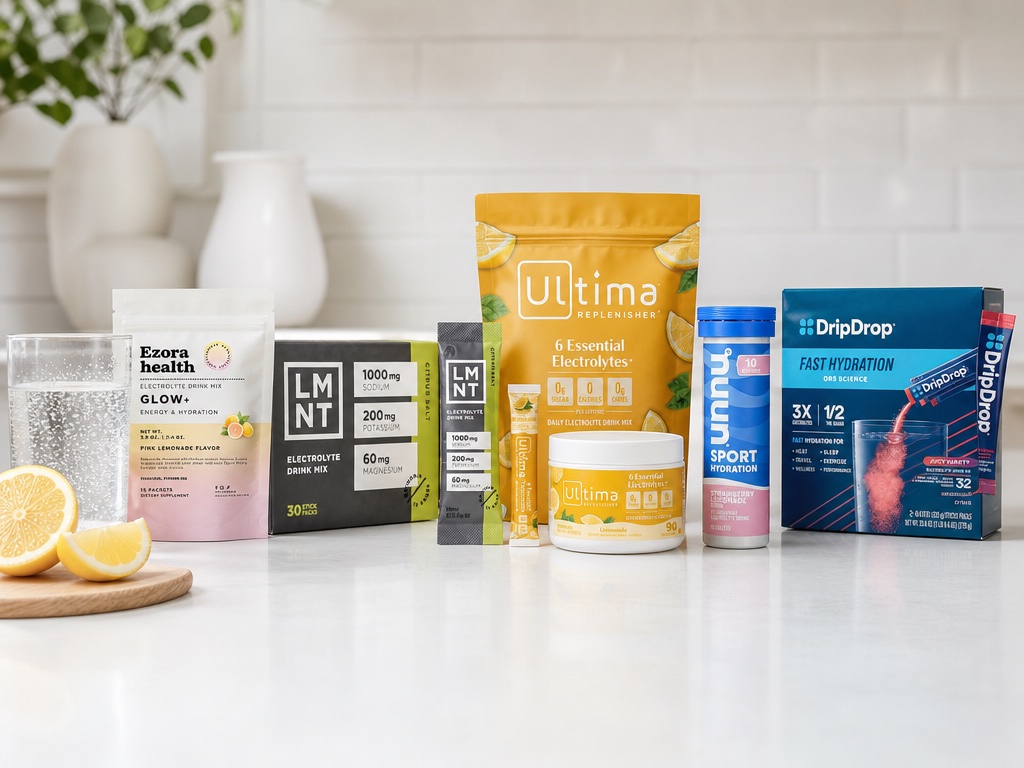
Best Sugar-Free Electrolytes: 5 Picks Ranked Honestly
A label-first ranking for keto, low-carb and fasting readers — scored on added sugar, sodium-to-potassium ratio, sweetener choice and the absence of maltodextrin.
Sugar-Free vs. No Added Sugar: Not the Same Thing
Untangling two label claims people routinely confuse, what each allows, the difference between naturally occurring and added sugar, and why to check the panel.