
LMNT vs Homemade Electrolytes: A Spec-Sheet Comparison
Side-by-side mineral breakdown — sodium, potassium, magnesium, cost per serving — between a packet mix and a DIY salt-and-citrate blend.
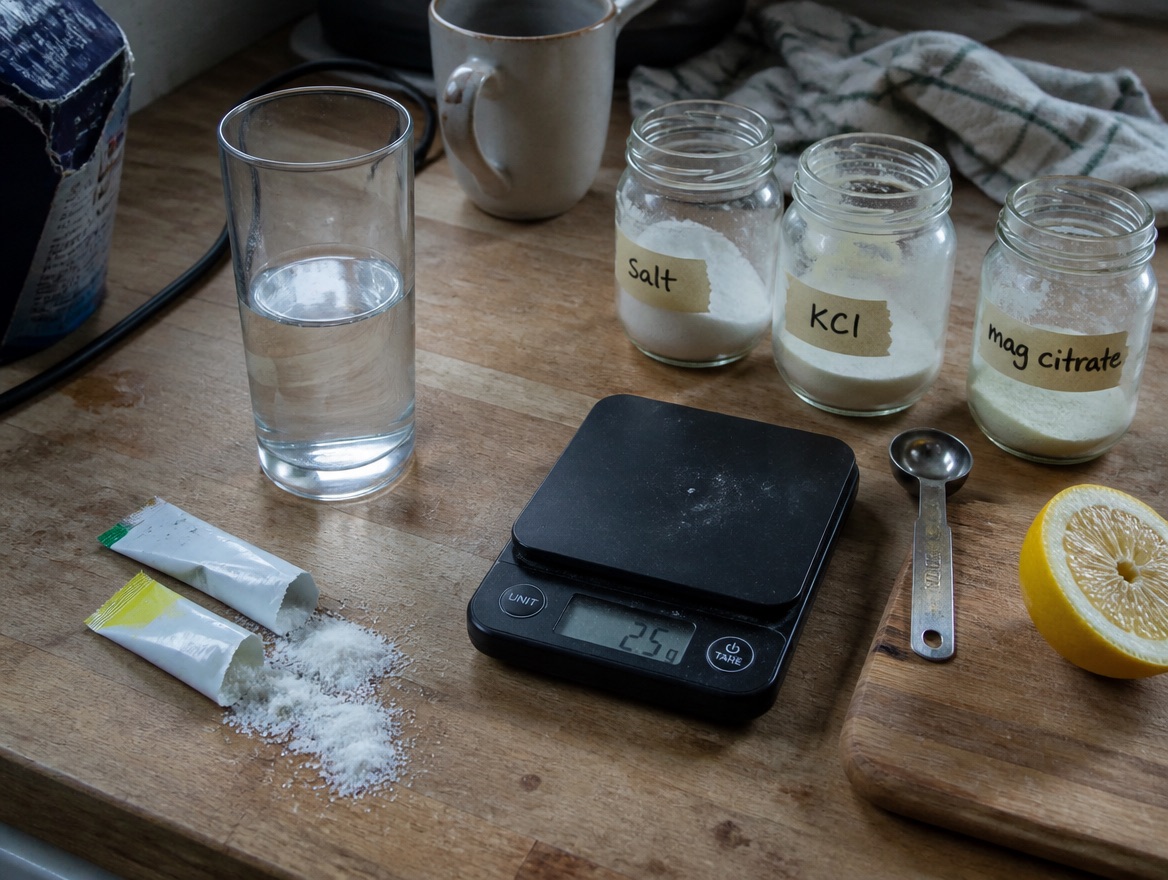
The “should I just mix my own?” question shows up in nearly every fasting and low-carb forum, and it gets a tidier answer once the two products are laid out as spec sheets rather than vibes. This piece does that: per-serving milligrams of sodium, potassium, and magnesium for a single LMNT stick versus a common DIY blend, plus the cost math underneath, plus the things a panel doesn’t show.
The two products, side by side
LMNT’s per-stick numbers are printed on the back panel of every box: 1,000 mg sodium, 200 mg potassium, and 60 mg magnesium per single-serving stick, with no added sugar and stevia leaf extract as the sweetener.
A common homemade recipe — the one shared most often in fasting and keto communities — uses food-grade salts measured by the gram rather than scooped by feel. A representative blend per serving:
- About 2.5 g sodium chloride (table salt or fine sea salt).
- About 0.5 g potassium chloride (a salt substitute like NoSalt or Nu-Salt).
- About 0.5 g magnesium citrate powder (e.g. Natural Vitality, plain unflavored).
- Dissolved in roughly 16 oz of water with a squeeze of lemon or a pinch of cream of tartar for taste.
Translating those grams into elemental milligrams is where the comparison starts to look apples-to-apples.
| Per serving | LMNT (1 stick) | DIY recipe above | Notes |
|---|---|---|---|
| Sodium (mg) | 1,000 | ~1,000 | 2.5 g NaCl × 0.39 sodium fraction. Both sit at the high end of the keto / fasting range. |
| Potassium (mg) | 200 | ~260 | 0.5 g KCl × ~0.52 potassium fraction. DIY is slightly higher; the cap is GI tolerance, not the panel. |
| Magnesium (mg) | 60 | ~50 | 0.5 g magnesium citrate × ~0.10 elemental fraction. Very close. |
| Added sugar (g) | 0 | 0 | Both pass the “no sugar” test by label and by recipe. |
| Sweetener | Stevia leaf extract | None (lemon for taste) | DIY skips sweetener entirely; LMNT relies on stevia. |
| Calories | 10 | ~0 | Negligible either way. |
| Cost per serving (US, mid-2026) | ~$1.50 | ~$0.10 | The DIY is roughly an order of magnitude cheaper at scale. |
The headline: at the recipe given, the two products land within a couple of percentage points on the three minerals that matter. The mineral profile isn’t really the differentiator.
Where the panel stops telling the story
A spec sheet flatters DIY harder than it should, because three things the table doesn’t capture all sit on the packet side of the comparison.
- Salt dosing precision. A 1,000 mg sodium target is 2.56 g of table salt. The difference between 2.0 g and 3.2 g — the realistic spread of a kitchen-spoon scoop — is the difference between a 780 mg dose and a 1,250 mg dose. A pre-measured stick removes that variance entirely. For people on keto, fasting, or anyone where the sodium target is load-bearing, that consistency is a real product feature.
- The taste cliff. Two and a half grams of plain salt in a glass of water is unpleasant. Most home mixers compensate by under-dosing or by adding things — sweetener, flavor drops, juice — that can sneak in their own sugars or sugar alcohols. LMNT and the small handful of similar packet products solve the palatability problem at a price.
- What’s in the salt. The sodium chloride in LMNT is food-grade and characterized; the potassium chloride and magnesium malate are spec’d at known elemental percentages. A home cook using a generic table salt with anticaking agents and a discount-brand KCl substitute is mostly fine, but the chain of custody is shorter and tighter on the packet side. For most healthy adults this is a small consideration; for someone watching iodine intake (table salt is iodized, sea salt usually isn’t, LMNT isn’t), it’s worth knowing.
What the spec sheet flatters about LMNT, in turn, also has a counterweight.
- The magnesium form. LMNT uses magnesium malate; the most common DIY recipe uses citrate. Both absorb reasonably; citrate is more associated with loose stools at higher doses, malate is gentler. A homemade mixer can swap citrate for glycinate to match — at a cost premium that narrows the price gap.
- The price gap. Roughly $1.50 a stick versus roughly 10 cents in raw materials is a 15× spread. For someone using three sticks a day on a fasting protocol, that math compounds quickly.
- The travel factor. A pre-measured stick fits in a pocket. A jar of three separately weighed powders does not.
The dose question — for both products
The two products converge on a sodium target near 1,000 mg per serving. That target is at the high end of what most low-carb and fasting protocols recommend per dose, and it’s a target several groups should not hit casually. Hypertension, kidney disease, heart failure, and pregnancy are all reasons to talk with a clinician about a sodium plan before adopting either the packet or the DIY version daily. The same goes for high potassium doses in people on ACE inhibitors, ARBs, or potassium-sparing diuretics — KCl on top of those medications can push blood potassium into a dangerous range. Nothing on either label, and nothing in any DIY recipe, replaces that conversation.
For generally healthy adults using either product occasionally on long efforts or during transition weeks of a low-carb diet, the upper-end sodium and potassium numbers are inside what most sports-nutrition guidance treats as reasonable. “Occasional” and “generally healthy” are doing real work in that sentence.
When the packet earns its premium
A spec-sheet comparison makes the packet look like an expensive convenience tax. In practice, the packet earns the premium in a few specific situations:
- Travel and out-of-the-house dosing, where mixing three powders by gram isn’t realistic.
- Sodium targets that need to be hit consistently, like a keto adaptation week or a planned 36-hour fast.
- The first few months of low-carb eating, where someone is still building the habit of mixing and salting and a packet removes one decision.
- People who under-salt their DIY blends to keep the taste tolerable — a common pattern that quietly defeats the point.
When the DIY wins
The DIY wins on cost, customization, and the absence of any sweetener — relevant for the subset of fasters who treat even stevia as a fasting-break risk and the larger group who don’t want a sweetener taste in their water at all.
It wins on customization, too: the same three salts in different ratios become a higher-magnesium evening dose, a higher-sodium pre-workout dose, or a low-potassium version for someone on a medication that requires it. The packet is a fixed formula; the DIY is a kitchen scale and three jars.
The bottom line
The mineral panels of a single LMNT stick and a common DIY recipe land within a few percentage points of each other on sodium, potassium, and magnesium. The packet’s premium buys precision, palatability, and portability; the DIY’s discount buys customization and a roughly 15× price advantage at scale. Either one delivers the dose; neither one decides whether that dose is right for you, and anyone with hypertension, kidney issues, or relevant medications should bring the choice to a clinician rather than settle it from a panel.
More to read

Thirst, Hydration, and Why Your Body Isn't a Bad Gauge
Reassessing the thirst is too late claim with a level head, how thirst regulation works, where the cue can lag, and how to combine it with other signs.

Can You Get Enough Electrolytes Without Any Supplements?
The food-first case for sugar-conscious eaters, food sources that cover the bases, when intake genuinely runs short, and avoiding the over-supplement trap.

Does Drinking More Water Flush Sodium and Detox You?
Testing a popular claim against how kidneys actually regulate sodium, why detox is mostly marketing, and when extra fluid does and does not help.